Everything you need to know about
Water Boil Advisories

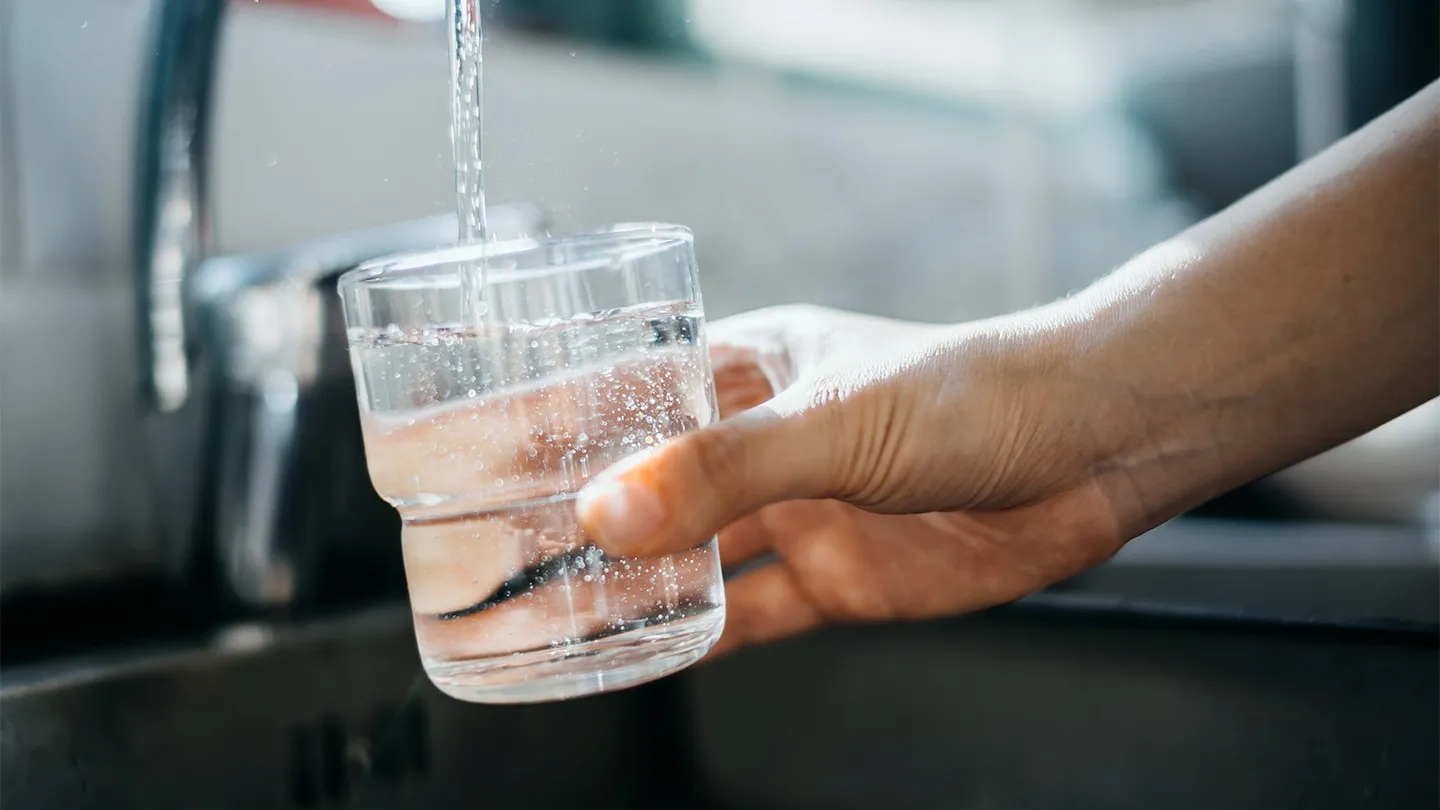
A glass of water being filled at a kitchen tap
1 min
rolling boil to make water safe
3 types
of notice: Boil, Do Not Drink, Do Not Use
46%
of advisories trace to main & line breaks

What is a water boil advisory?

A water boil advisory is a public notice from your water utility or health department warning that your tap water may be unsafe, because it could contain harmful microbes such as bacteria, viruses, or parasites. Until it’s confirmed safe, you’re asked to boil it first (or use bottled water) for anything you’ll swallow.

Most are precautionary, issued the moment conditions could let germs in, like a main break or a drop in pressure, not because anyone was made sick. And boiling only fixes that one problem: it kills living germs but does nothing for chemicals like PFAS or lead, which is why there’s more than one kind of notice.

The types of notices you may receive

Three main advisories exist, and the right response depends on which one your utility issued.

Boil Water Advisory

a.k.a. boil water notice / boil order

What it means
Your water may contain disease-causing germs, such as bacteria, viruses or parasites.
When it’s issued
Issued after a water main break, a drop in system pressure, a positive bacteria test, or a treatment problem.

Do Not Drink Advisory

chemical contamination

What it means
A chemical or toxin is present that boiling will not remove, and boiling can concentrate it.
When it’s issued
Issued for contaminants like certain chemicals, fuel, or elevated levels of substances such as PFAS or lead.

Do Not Use Advisory

avoid all contact

What it means
The water is unsafe even for bathing, washing or flushing; contact or fumes can be harmful.
When it’s issued
Rare. Issued for hazardous chemical spills or contamination dangerous to skin or when inhaled.

What to do when you get a notice

First, read the notice to see which type it is. Then follow the matching steps. These reflect current CDC guidance.

During a Boil Water advisory

Make water safe: bring clear tap water to a rolling boil for 1 minute (3 minutes above 6,500 ft), let it cool, and store it covered. Or use bottled water. No stove? Disinfect clear water with unscented household bleach: about ⅛ teaspoon (8 drops) per gallon, then wait 30 minutes.

Use boiled or bottled water for

  • Drinking & making ice
  • Cooking & washing produce
  • Brushing teeth
  • Preparing infant formula
  • Mixing drinks & water for pets

Usually still OK with tap water

  • Showering & bathing (just don’t swallow the water)
  • Sponge-bathe young children so they don’t swallow it
  • Washing dishes on a hot “sanitize” dishwasher cycle, or hand-wash then sanitize-rinse
  • Laundry

After the advisory is lifted

Flush your pipes: run cold taps for about 5 minutes, flush the water heater, run and discard several batches of ice, and replace water filters.

During a Do Not Drink or Do Not Use notice

Do not boil the water. Boiling will not remove chemicals such as PFAS or lead and can concentrate them.

  • Air to water generation provides clean drinking water daily and independence from pipes. Learn more here.
  • Use bottled water for everything the notice covers.
  • Follow the utility’s exact instructions: a Do Not Drink notice may still allow bathing; a Do Not Use notice does not.
  • Don’t give tap water to infants, pets, or use it for formula.
  • If you may have been exposed, or have symptoms, call your doctor or poison control; call 911 for emergencies.

A certified home filter or Spout can reduce chemical contaminants like PFAS and lead. See our guide to home water filters. If in doubt about which notice you have, contact your water provider, the number is on your bill and on the notice.

The issues facing your drinking water

The five biggest pressures on America’s water systems, and what each one means for what comes out of your tap.

01

Water main breaks & pressure loss

The single biggest driver. When a main breaks or system pressure drops, untreated groundwater and contaminants can be pulled into the pipes. In our first-party data, main or line breaks alone account for 46% of advisories with a stated cause, more than the next four causes combined.

Read more →
02

Bacterial & microbial contamination

A routine sample comes back positive for total coliform or E. coli, signs that disease-causing organisms could be in the supply. Boiling is effective here: it kills bacteria, viruses and parasites.

Read more →
03

Aging infrastructure & lead pipes

Much of the U.S. distribution network is decades old. The EPA estimates about 9 million lead service lines are still in use; its 2024 Lead and Copper Rule Improvements require utilities to replace them within 10 years. Old, failing pipes break more often (a boil advisory), and lead itself is a chemical that boiling cannot remove (a Do Not Drink concern).

Read more →
04

PFAS & chemical contamination

“Forever chemicals” (PFAS) and other chemical pollutants do not respond to boiling; in fact, boiling concentrates them. In 2024 the EPA set the first national drinking-water limits for PFAS: 4 parts per trillion for PFOA and PFOS. These trigger a Do Not Drink notice, not a boil advisory.

Read more →
05

Weather: floods, wildfire & freeze

Extreme weather overwhelms water systems. Flooding can swamp treatment plants and wells; wildfires can damage pipes and draw chemicals into the network; hard freezes burst mains and knock out pressure. Each can put a community under a boil advisory.

Read more →

Where advisories come from, and what causes them

For a year (June 2025 to May 2026) we tracked public utility water notices from across the country, logging what caused each one and mapping where it happened.

The root causes of water advisories

Behind most advisories lies one core problem: America’s aging water infrastructure system.

Top 10 root causes of US boil water advisories, June 2025 to May 2026, based on 1,001 classified records. Infrastructure and operations account for 78.7 percent, contamination 15.6 percent, and weather or fire 5.7 percent. The single largest cause is a main or line break at 46.2 percent.

Infrastructure & operations 78.7% Contamination 15.6% Weather & fire 5.7%
  1. 1 Main / line break 46.2%462
  2. 2 Planned maintenance / repair 13.2%132
  3. 3 Contamination (unspecified) 12.3%123
  4. 4 Loss of pressure / outage 9.7%97
  5. 5 Weather / natural event 4.5%45
  6. 6 Leak 3.7%37
  7. 7 Power / equipment failure 3.4%34
  8. 8 Bacterial contamination (confirmed) 3.3%33
  9. 9 Treatment plant issue 2.6%26
  10. 10 Fire / firefighting 1.2%12

These categories overlap. Severe weather (freezes, floods, storms) can itself cause many of the main breaks, pressure losses and contamination events counted above, so the true footprint of weather is larger than the 5.7% shown here.

Based on the 1,001 of 1,485 notices between June ’25 – May ’26 that named an actual cause.

Geographic density of boil water advisories

Each point is a community that issued at least one advisory.

Map of the United States showing 694 clusters of boil water advisories between June 2025 and May 2026. Circle size scales with advisory count. The densest clusters are Melbourne Florida with 23, New Orleans with 22, Detroit suburbs with 20, and Waterbury Connecticut with 18. Coverage is heavily concentrated in the South and lower Midwest, with Louisiana, South Carolina and Kansas far denser than the West Coast.

1,421advisories mapped
694communities affected
23most in one place
1  ·  5  ·  12  ·  23 advisories Bigger points saw more. Hover for detail.

Read the map as coverage, not a hazard ranking. Data pulled from water boil advisory notices issued across the US between June ’25 – May ’26. It is not a complete list of every advisory issued over that time period.

Note: these figures reflect the notices we were able to collect and classify. This data illustrates our monitored coverage, not a ranking of which places have the most dangerous water. Differences between states partly reflect how each publishes notices.

Air to water generation

A new countertop appliance makes clean drinking water from the air every day. No pipes, no advisories, no PFAS, no plastic bottles.

  • Non-detect for PFAS, microplastics and lead in third-party lab testing: the chemical contaminants that boiling can’t remove and basic pitchers often miss.
  • No plumbing, no bottles, no delivery. It runs on a standard outlet and needs only about 10% humidity in the room.
  • Makes roughly 0.75 to 2.5 gallons a day, refilling a fresh pitcher on its own.

Six stages of filtration + Hospital-grade air filter at intake

  1. 1Sediment pre-filterRemoves particulates
  2. 2Activated carbonPolishes taste & odor, adsorbs trace organics
  3. 3Electropositive captureGrabs the finest sub-micron particles
  4. 4Fine membraneA tight barrier for dissolved contaminants
  5. 5UV-C treatmentReduces biological activity
  6. 6RemineralizationAdds back calcium, magnesium & potassium
Sources

Every factual claim on this page is drawn from primary public-health and regulatory guidance, or from our own advisory monitoring.

This site is an independent educational resource. It is not affiliated with the CDC, the EPA, or any water utility, and it does not replace the instructions your local water provider or health department gives you. Always follow your official notice.